What Breaks Next · November 13, 2026
The Microsoft 365 Outage Is an Architecture Story
Bug or attack matters less than it used to. What matters is how far one failure can travel. As enterprises connect their own agents to the monoliths they can’t replace, architecture, networking and resilience have to come first again.
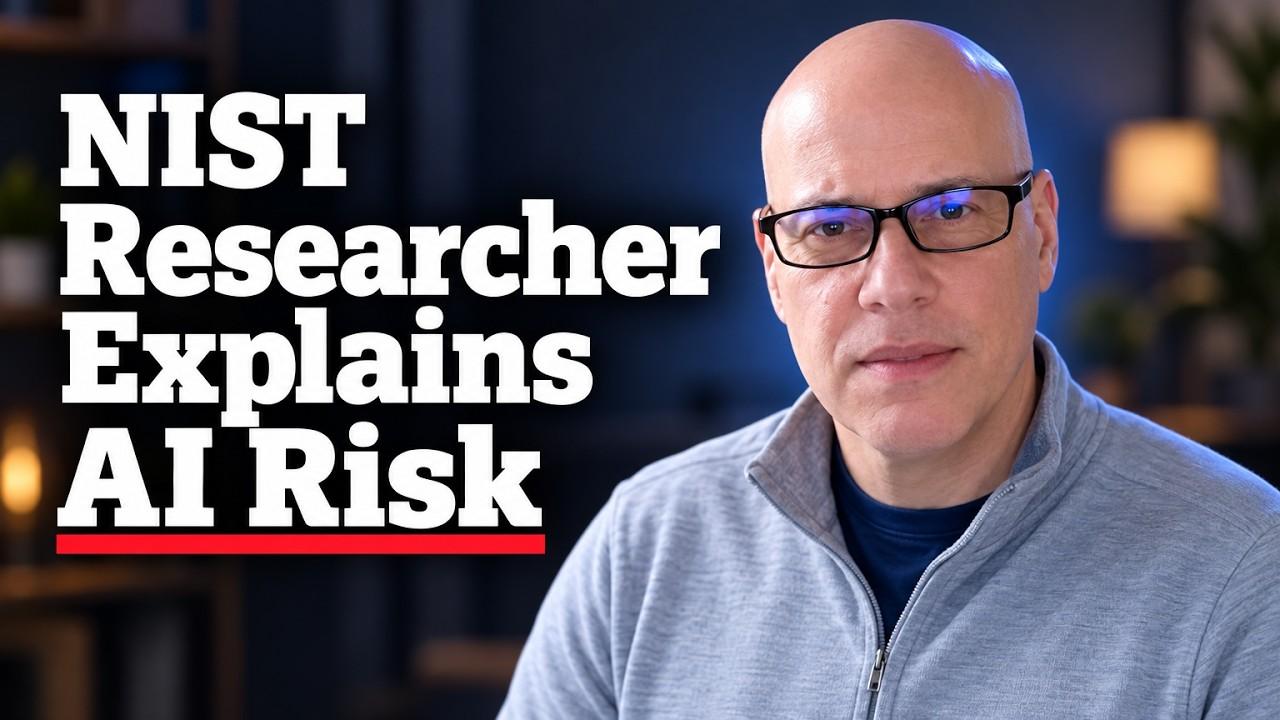
By Megan Dahlgren · Watch the interview with Apostol Vassilev (NIST)
On Thursday, November 12, Microsoft 365 went down around the world. Outlook was hit hardest, Copilot went largely dark, and the disruption ran through the Asian and European business days into Friday, reaching users in 74 countries. Microsoft says it traced the problem to an issue during an earlier network capacity upgrade, and that there’s no sign of a cyberattack. The full root cause isn’t out yet.
Here’s my argument: whether an outage is a bug or an attack matters less than it used to. What matters is how far one failure can travel. That’s a question of architecture, and it’s one most enterprises stopped asking when they moved to the cloud.
The cloud let us forget architecture
In the 1990s, enterprise architecture was a discipline. Teams used frameworks like Zachman and TOGAF, debated service-oriented design, and mapped every system and dependency before building. On-premise, you owned the consequences, so you planned for them.
The cloud and SaaS changed the deal. Microsoft, Salesforce and AWS took on the architecture, and enterprises bought outcomes instead. That was a good trade for 15 years. It also meant a generation of enterprise teams stopped thinking about where their systems could break, because someone else was supposed to.
This week is a reminder that the dependency never went away. It just moved out of sight.
Why architecture matters again: agents meet the monoliths
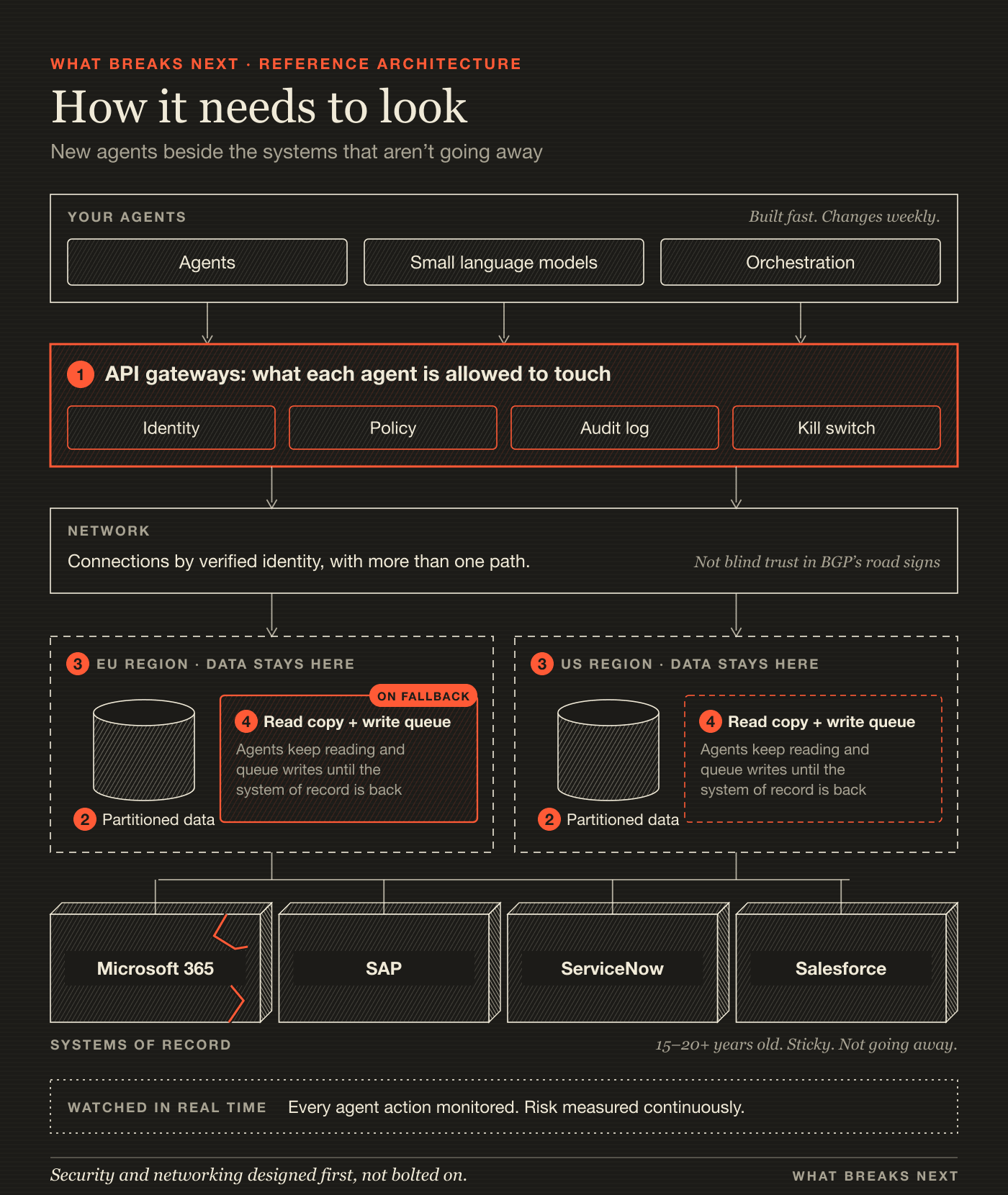
Let’s be pragmatic. Microsoft, SAP, ServiceNow and Salesforce aren’t going away. Their architectures go back 15 to 20 years or more, and their customer bases are sticky for good reasons. The question isn’t whether to replace them. It’s how to build new things beside them without inheriting their failure modes.
That question is suddenly urgent. Enterprises are building their own agents and small language models that read from and write to these systems through APIs. Every one of those connections is a new seam where things can break or be breached. Getting it right means deciding up front:
Where the gateways sit, and what an agent is allowed to touch through them.
How data is partitioned, so one failure or breach doesn’t expose everything.
Where data must stay, as sovereignty rules tighten.
What keeps working when the system of record goes dark.
None of that can be bolted on at the end. Security and resilience have to be architecture decisions, made first.
The layer nobody talks about: what is BGP?
If architecture is under-discussed, networking is nearly invisible. Software teams treat the network as plumbing. But the internet runs on a protocol most executives have never heard of: the Border Gateway Protocol, or BGP.
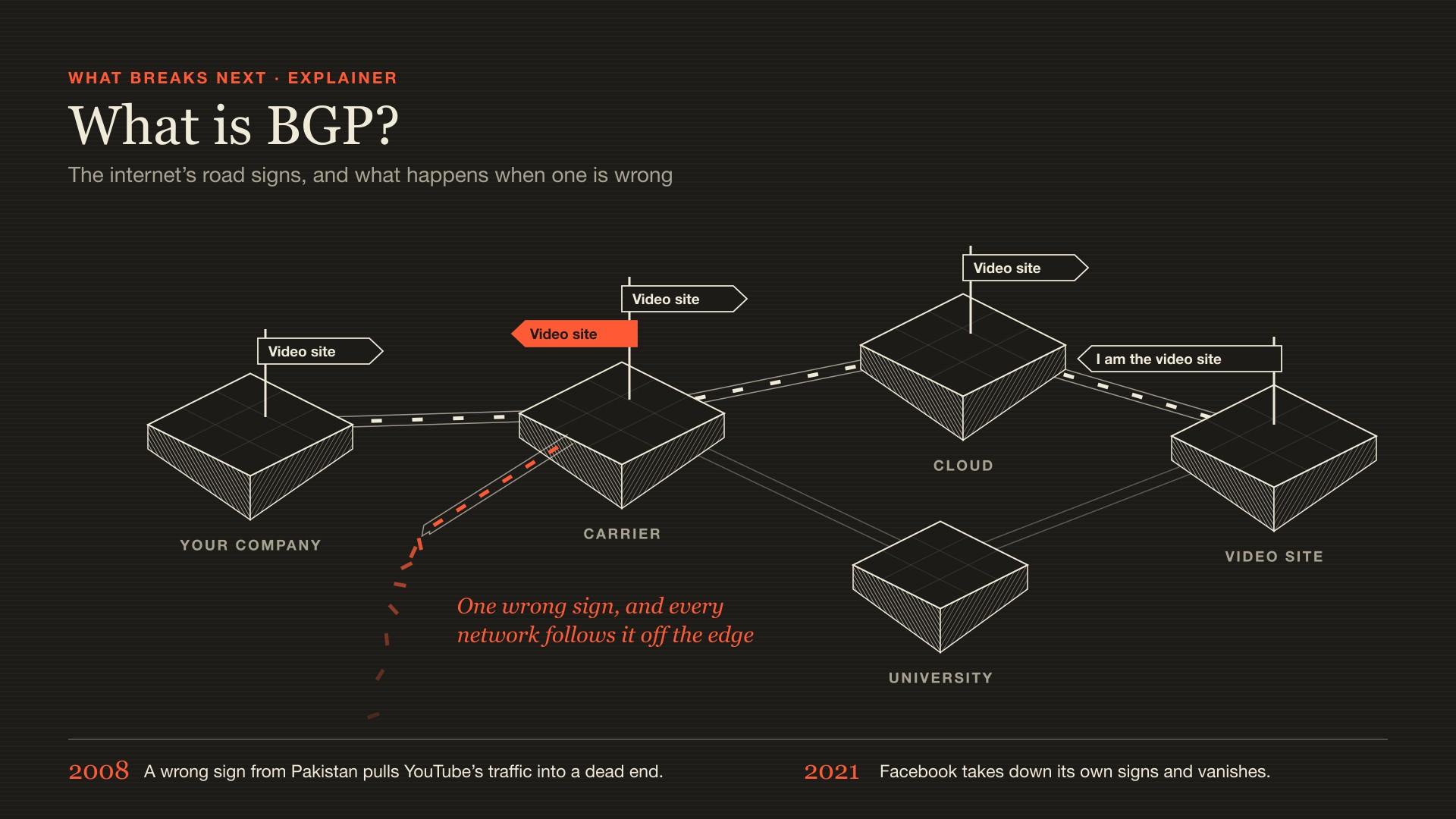
The internet isn’t one network. It’s tens of thousands of separate networks run by carriers, clouds, universities and companies. BGP is how they tell each other which addresses they can reach. Think of it as a global system of road signs that every network posts and every other network trusts.
BGP was designed in 1989, for a much smaller and friendlier internet. It runs largely on trust, so one wrong or malicious announcement can send traffic the wrong way, or nowhere. In 2008, a bad announcement in Pakistan briefly knocked YouTube offline worldwide. In 2021, a faulty maintenance command led Facebook to withdraw its own routes, and Facebook, Instagram and WhatsApp vanished from the internet for about six hours.
New approaches are emerging. Identity-based overlays like Tailscale and noBGP (disclosure: I advise noBGP) connect systems by cryptographic identity instead of trusting the road signs. SCION, a next-generation routing architecture already used in Swiss financial networks, lets senders choose their path and contains failures. For anyone connecting agents to critical systems, this is worth understanding.
The explainer
What Is BGP? The Internet’s Road Signs, Explained →
Build for extreme weather
When you build a house today, you don’t plan for the once-in-50-years storm. You plan for extreme weather that might arrive every year, and you choose materials accordingly.
Digital infrastructure needs the same mindset. In my What Breaks Next interview with Apostol Vassilev, a senior researcher at NIST, he explained that AI now lets almost anyone launch attacks that once took a nation-state’s resources, and exploit weaknesses once considered too hard to reach. Add internal failures like this week’s, and the conclusion is the same: systems are more fragile and more interconnected, and outages will be more frequent.
So stop asking whether the next outage will come from inside or outside. Assume both, often, and design so that neither takes everything down with it.
The org chart is part of the architecture
The hardest seams aren’t technical. In most large companies, the CTO makes strategic and software decisions and throws them over the fence to the CIO. Even when the CTO reports to the CIO, that doesn’t mean they work together. CIOs usually inherit what they run, after it’s been built, and increasingly that means managing monoliths like Microsoft 365 and Salesforce they didn’t design.
Meanwhile, anyone who has used a tool like Claude Code knows how fast you can now build software. So CIOs are starting to ask a fair question: is there another way? Which of these systems do we truly need, and which could we build, partition or replace?
That’s not an argument to rip anything out. It’s an argument to bring enterprise architects, network engineers and security teams into the room before the next agent goes live, not after the next outage.
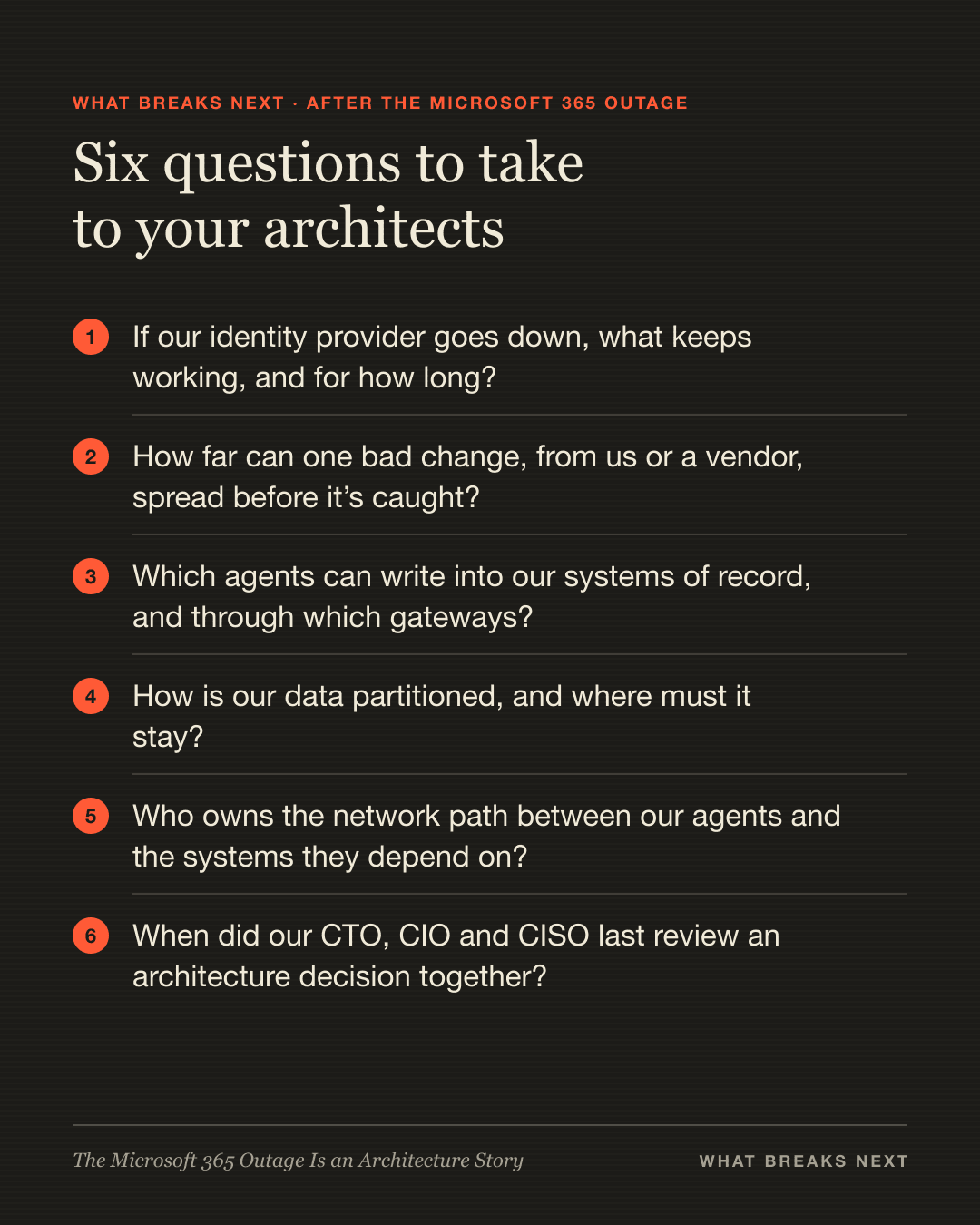
Questions to take to your architects
If our identity provider goes down, what keeps working, and for how long?
How far can one bad change, from us or a vendor, spread before it’s caught?
Which agents can write into our systems of record, and through which gateways?
How is our data partitioned, and where must it stay?
Who owns the network path between our agents and the systems they depend on?
When did our CTO, CIO and CISO last review an architecture decision together?
What’s next
This is the start of the next What Breaks Next research report: how enterprises can build nimble, resilient architecture beside the platforms they can’t replace. As an independent analyst, I’ll ask the hard questions of every vendor, including the biggest ones.
I’m interviewing enterprise architects, CIOs, CTOs, CISOs and network engineers who are working through this now. If that’s you, or you’re building what comes next, get in touch. I’d love to have you on the podcast or in the research.